ERNIE-Image vs Qwen-Image-2512: 8B Lightweight vs 20B Heavyweight — The Open-Weight Showdown
On New Year's Eve 2025, Alibaba's Qwen team dropped Qwen-Image-2512 — a 20B-parameter MMDiT upgrade, backed by a claim of "over 10,000 blind evaluations, ranked #1 among open-source text-to-image models." Four months later, Baidu's ERNIE-Image team open-sourced ERNIE-Image with just 8B parameters, throwing down the gauntlet: "an 8B model that performs like a 20B model."
Both are Apache 2.0. Both are free for commercial use. Both invest heavily in Chinese text rendering. But their strategies are polar opposites: Qwen throws 20B parameters at the problem and lets scale set the ceiling; ERNIE squeezes everything into 8B, using architectural cleverness and an external Prompt Enhancer to make up the difference. This is the classic open-weight dilemma: do you want the headroom of 20B, or the agility of 8B?
Architecture: Two Different Roads
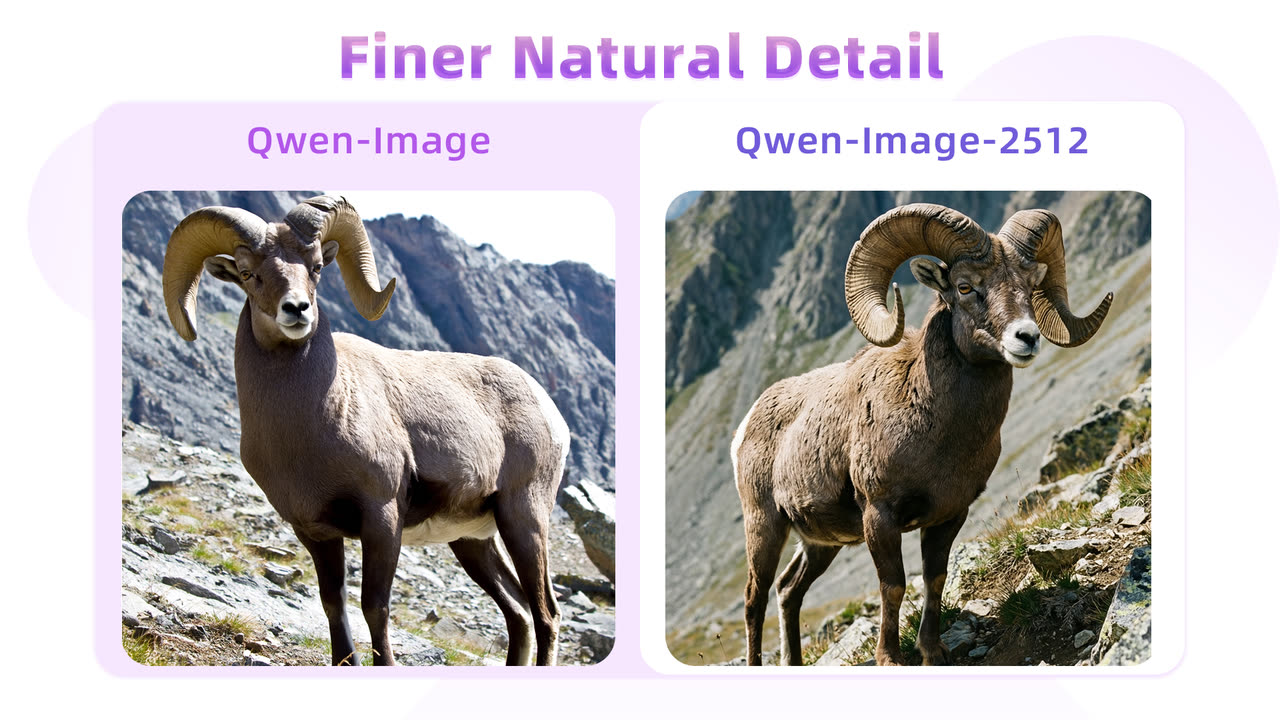
Qwen-Image-2512 keeps the Multi-Modal Diffusion Transformer (MMDiT) design of its predecessor — text and image tokens modeled jointly in a single transformer, with all 20B parameters in the backbone. This generation focuses on three upgrades: reducing the "AI look," richer natural detail, and better text rendering with improved layout and multimodal composition.
ERNIE-Image takes the "compact + enhanced" route: an 8B single-stream DiT backbone paired with a 3B Prompt Enhancer (PE), fine-tuned from Ministral 3B. PE expands short user inputs into detailed structured descriptions before they reach the DiT. The SFT version runs 50 steps; the Turbo version (distilled with DMD + RL) needs only 8.
Benchmarks: Different Crowns
Put the two official benchmark tables side by side and the picture is clear — ERNIE wins text rendering; overall instruction following is a split decision.
| Benchmark | ERNIE-Image | Qwen-Image-2512 |
|---|---|---|
| GenEval Overall | 0.8856 (open #1) | 0.8683 (Qwen-Image) |
| LongText-Bench Avg | 0.9733 (open #1) | 0.9604 |
| OneIG-EN Overall | 0.5750 (#3) | 0.5300 |
| OneIG-EN Text | 0.9788 | 0.9900 |
| OneIG-EN Reasoning | 0.3566 (best overall) | 0.2920 |
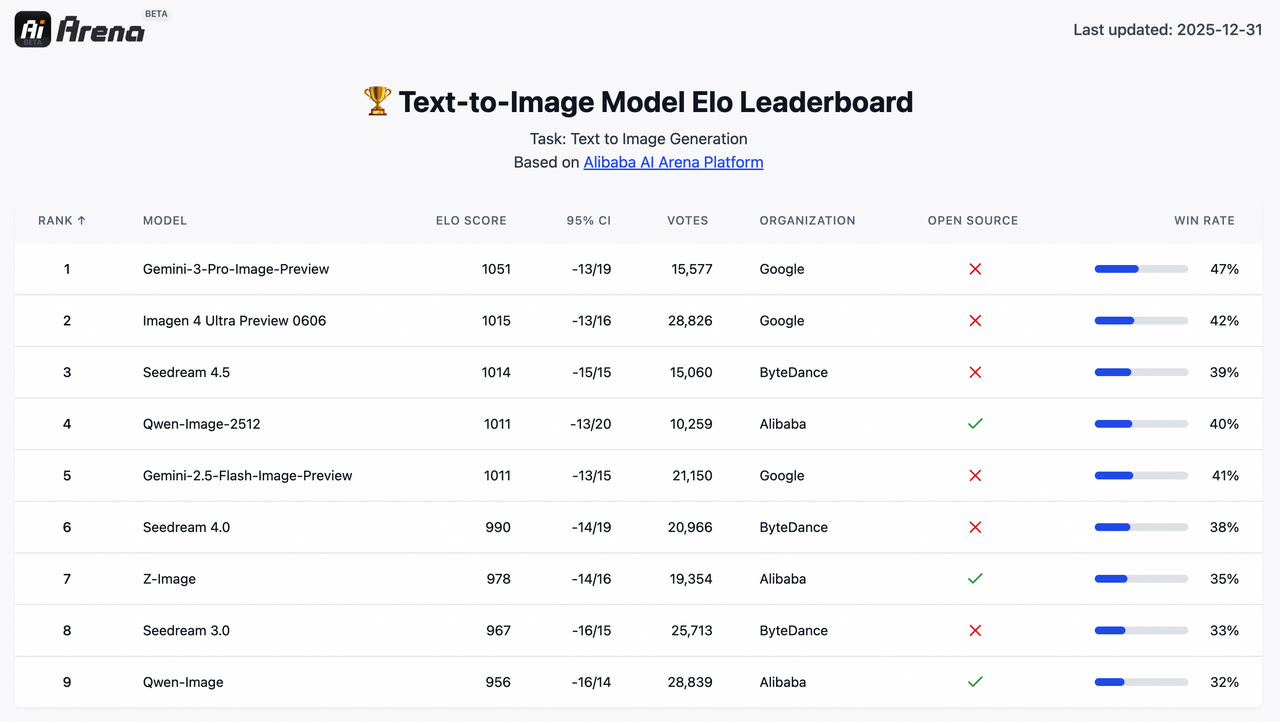
On LongText-Bench, ERNIE-Image leads both English (0.9804) and Chinese (0.9661). Qwen-2512 edges ahead on the OneIG-EN text dimension, but ERNIE takes the highest reasoning score of any model on that benchmark. Qwen's trump card is AI Arena, where over 10,000 blind human evaluations put it at #1 among open-source models.
Getting Started: VRAM Sets the Bar
This is where the gap is most tangible. ERNIE-Image's full-precision weights are roughly 16GB, and the official docs say a 24GB consumer GPU is enough. ComfyUI loads it from a template search; Diffusers, SGLang, fal.ai, Replicate, and SiliconFlow all support it out of the box.
Qwen-Image-2512's 20B weights come in at around 40GB in full precision — local deployment usually means GGUF quantization or offloading. The Qwen ecosystem is older and better documented, though, and Qwen-Image 2.0 offers an API-only path with 4-step generation for those who don't want to self-host.
# ERNIE-Image: one-line Diffusers
from diffusers import ErnieImagePipeline
pipe = ErnieImagePipeline.from_pretrained("baidu/ERNIE-Image", torch_dtype=torch.bfloat16)
Qwen-Image-2512: official inference script
from qwen_image import QwenImagePipeline

pipe = QwenImagePipeline.from_pretrained("Qwen/Qwen-Image-2512", torch_dtype=torch.bfloat16)
Text Rendering: Posters and Chinese Typography
Text-in-image is ERNIE-Image's calling card — posters, comics, multilingual layouts — backed by the #1 open-source score on LongText-Bench. Community testing agrees: for long text, dense layouts, and mixed Chinese-English copy, ERNIE is more reliable. Qwen-2512 pushes text rendering from "legible letters" to "better layout and more faithful text+image composition," with official examples showing complete slides with timelines generated in one pass.
For designers whose text IS the subject — Chinese posters, e-commerce banners, infographics — both models deliver. But when long passages must stay readable, ERNIE's LongText-Bench lead is concrete.
Realism: Qwen's Home Turf
The entire Qwen-Image-2512 upgrade revolves around realism: skin texture, hair strands, water and foliage fidelity. In the official comparisons, the same prompt produces noticeably more photographic faces and sturdier object textures with the 2512 checkpoint.
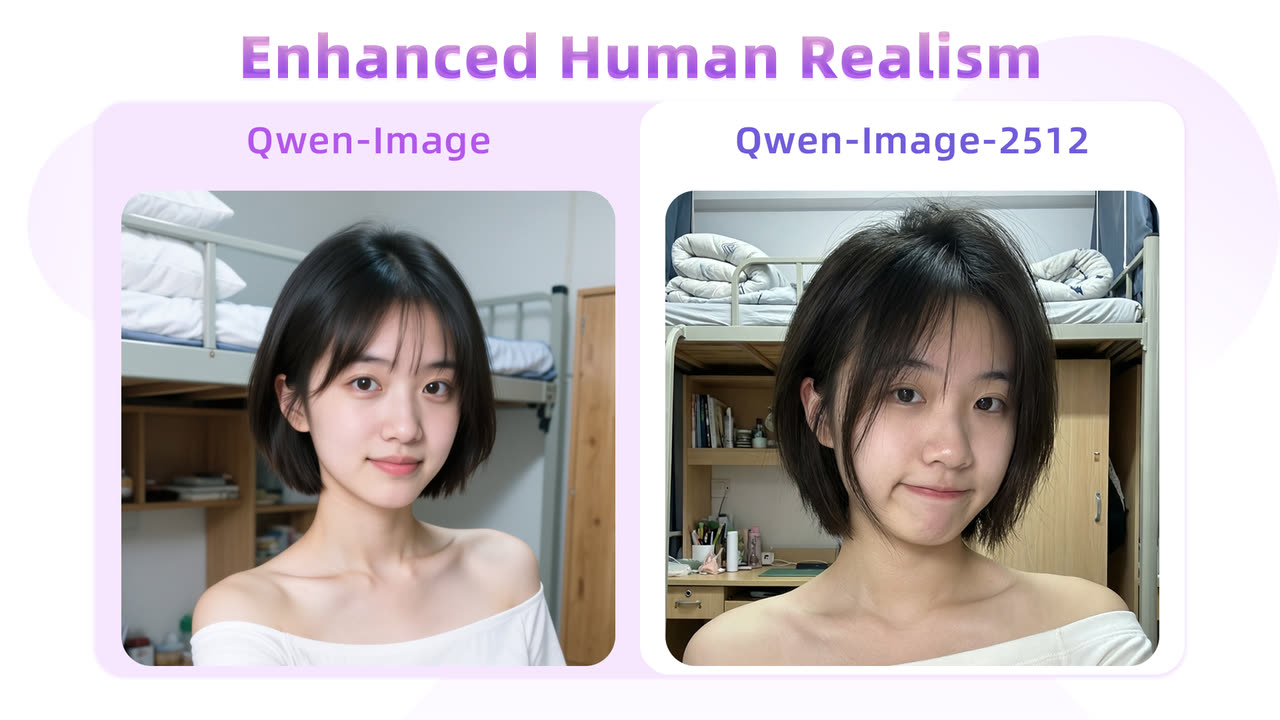
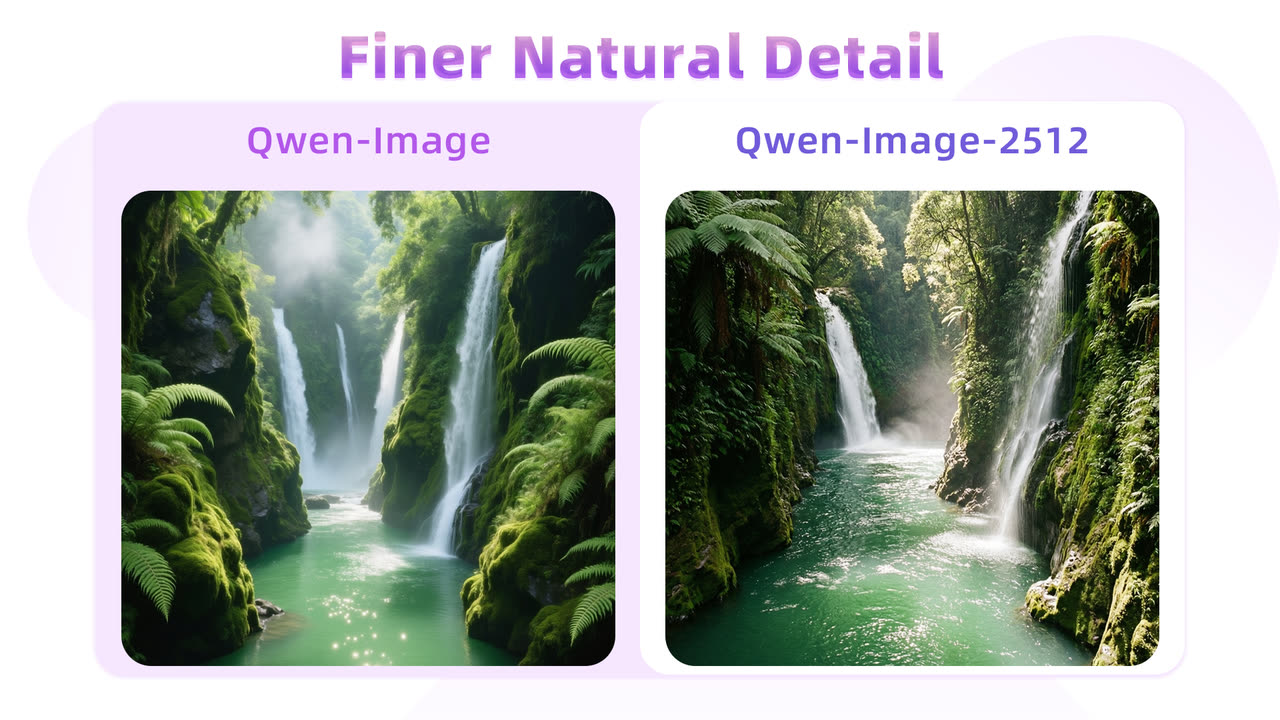
ERNIE-Image's realism is respectable — it tops GenEval overall with just 8B — but its design center is structured generation, not photographic portraiture. If "photo-grade" output is the goal, Qwen-2512 has the deeper bench.
Editing: One Has It, One Waits
Here's the most awkward comparison of 2026: Qwen's editing model, Qwen-Image-Edit, has been open-source for months (Apache 2.0) and leads all open models on the Arena image-editing leaderboard at 1241 Elo — supporting text editing, style transfer, view rotation, even multi-image editing. ERNIE-Image's official editing model still hasn't shipped; the community has been waiting since April.
For anyone needing a complete generate + edit pipeline, the Qwen family closes the loop today. ERNIE users are stuck with img2img + masking workarounds.
Ecosystem and License: Both Apache 2.0
Licensing is identical — Apache 2.0, unrestricted commercial use, the highest tier among Chinese open models. Qwen has seniority and more tutorials; ERNIE has spread fast: CivitAI official LoRA training, AMD Day-0 support, Intel OpenVINO, Krita plugin — the mainstream platforms were covered within six months.
Which One Should You Pick?
- Limited VRAM, local first: ERNIE-Image — 24GB entry point, 8-step Turbo
- Photorealistic output: Qwen-Image-2512 — the 20B detail ceiling is real
- Chinese long-form typography: ERNIE-Image — #1 on LongText-Bench
- Native editing today: Qwen-Image-Edit — the only complete open-source edit stack
- Commercial deployment: either — Apache 2.0, zero legal friction
Baidu proved an 8B model can fight above its weight class; Alibaba proved 20B still buys a higher ceiling. There's no loser here — open source is the real winner.