ERNIE-Image vs Krea 2: 8B Fully Open vs 12B Creative Exploration Engine — Text Rendering Meets Style Diversity
On June 22, 2026, Krea uploaded two 12B-parameter weight files to Hugging Face. The accompanying license made the open-source community read it three times: "Free for commercial use under 50 seats; above that, talk to us about an enterprise license." This was neither Apache 2.0 nor a non-commercial gate — it was a third path sandwiched between the two. Three months earlier, Baidu had fully opened ERNIE-Image's 8B weights under Apache 2.0. Now Krea 2 arrived with the slogan "built for creative exploration," and for the first time, two fundamentally different philosophies of "openness" collided head-on in open-weight image generation.
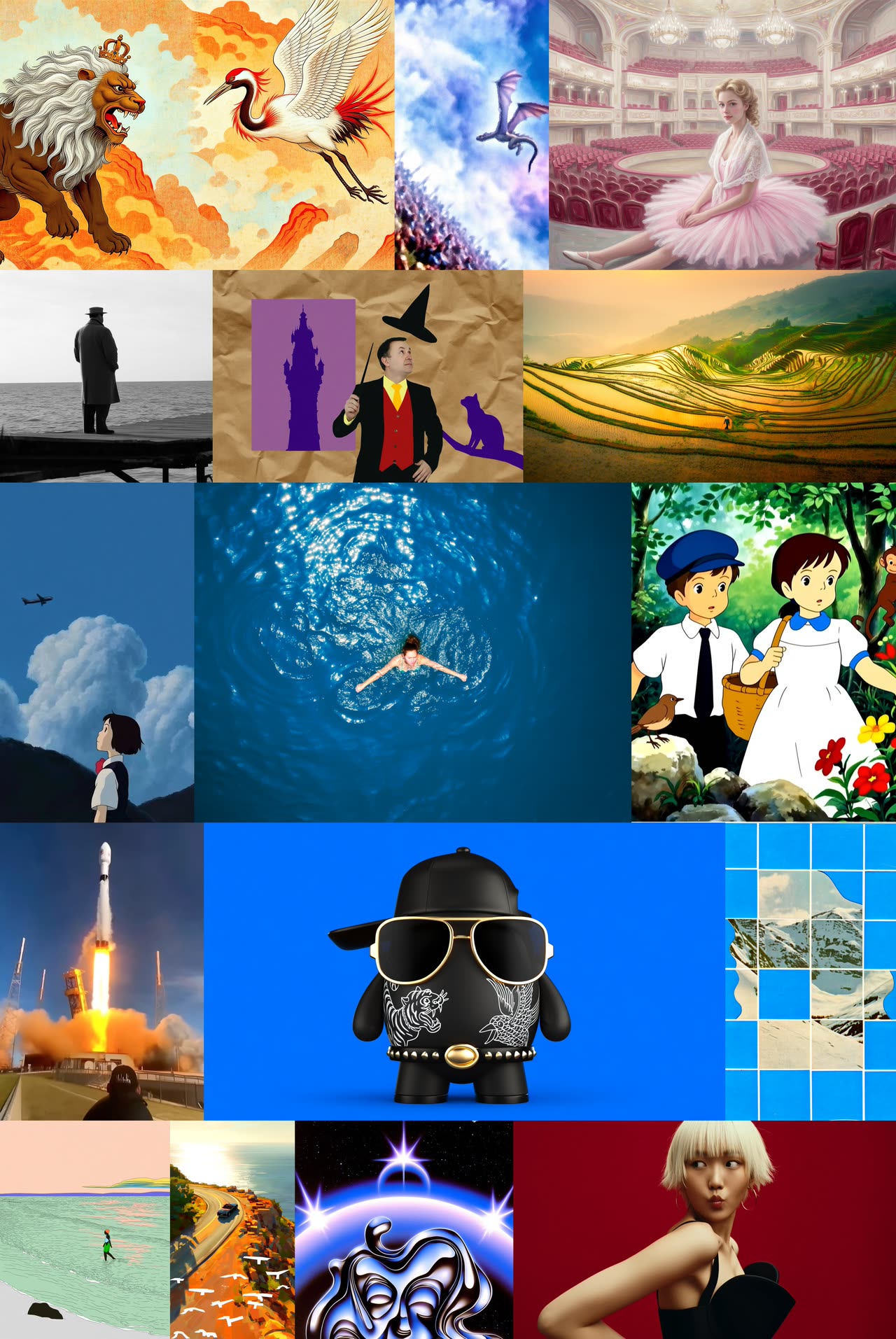
Both models are single-stream DiTs. Both were open-sourced in the first half of 2026. Both claim to be "efficiency-class" models. But ERNIE-Image bets on text rendering and instruction following — posters, comics, multilingual layouts — while Krea 2 bets on stylistic diversity and explorability: helping creators find the "unexpected" image across a wide visual distribution. For teams choosing an open-weight text-to-image model, this is no longer a question of "which is better," but "what do you actually want?"
Architecture: Same Single-Stream DiT, Two Design Philosophies
ERNIE-Image follows a "compact + enhancement" path: an 8B single-stream DiT backbone paired with a 3B Prompt Enhancer (PE) that expands short inputs into structured descriptions. The SFT version runs 50 inference steps; Turbo runs 8. It saves parameters and relies on an external enhancer for instruction understanding.
Krea 2 instead transplants mature LLM ecosystem designs wholesale into a diffusion model. It is a 12B single-stream MMDiT where text and image tokens share weights. Attention uses GQA + gated sigmoid attention (more stable training), the MLP is SwiGLU, normalization is zero-centered RMSNorm + QKNorm, and the text encoder jumps from T5-XXL straight to Qwen3-VL. The boldest change is time modulation: the traditional per-block MLP — which can consume 20-30% of total parameters — is replaced with lightweight bias terms, and the freed parameters are reinvested into the attention and MLP layers.

Neither path is objectively right: ERNIE-Image produces results comparable to 20B models from just 8B parameters; Krea 2 trades 12B for broader style coverage. Both sit in the same "efficiency-class" tier, well below Qwen-Image (20B) and FLUX.2 [dev] (32B).
Data Philosophy: Krea 2's Contrarian Moves
The most counterintuitive claim in the Krea 2 technical report: they refuse to filter training data with aesthetic scoring models. The reasoning is that such filters carry implicit bias — motion blur may be a deliberate artistic choice, yet IQA models discard it as a low-quality sample. Even more radical: they exclude AI-generated images entirely from pretraining, arguing that "synthetic images are too easy to learn — even a small proportion introduces bias into the output distribution, effectively imposing an upper bound on model quality."
To make this work, the Krea team built a custom pipeline: a large VLM generates pseudo-labels, and sub-1B classifiers based on DINOv3/SigLIP-2 run filtering at scale. Captioning goes through three stages (OCR extracts visible text → caption model fuses camera metadata and world knowledge → a cheap LLM reformats into varied lengths). They also ran PageRank over the top 90% of English Wikipedia, full-text searched roughly 5 million concepts, and prioritized sampling rare ones — the goal being a model that "can draw anything you can name."
ERNIE-Image takes a more pragmatic route: high-quality SFT data plus instruction tuning, backed by the PE enhancer, delivering quantifiable results — GenEval 0.8856 (open-source #1) and LongTextBench 0.9733 (open-source #1). Which data philosophy wins will be decided by benchmarks in the short term and by community output in the long term.
Getting Started: Two Deployment Paths
Both models are supported in mainstream deployment stacks. ERNIE-Image loads directly in ComfyUI via built-in nodes, weights auto-download from Hugging Face, and it runs on consumer GPUs with 24GB VRAM. Official support spans Diffusers, SGLang, and an AI Studio online demo, with ecosystem coverage across fal.ai, Replicate, SiliconFlow, and CivitAI.
Krea 2's Raw checkpoint is explicitly labeled "not recommended for inference" — it is a base for LoRA training and fine-tuning. For everyday generation, use Turbo: 8 steps, native 2K, roughly 2 seconds on consumer hardware. Three ways to run it:
# Official codebase (Raw)
uv run inference.py "a fox walking in the snow" --checkpoint oss_raw --steps 52 --cfg 3.5
Diffusers
pipe = Krea2Pipeline.from_pretrained("krea/Krea-2-Raw", torch_dtype=torch.bfloat16)

pipe("a fox in the snow", num_inference_steps=52, guidance_scale=3.5).images[0]
SGLang
sglang generate --model-path krea/Krea-2-Raw --prompt "a red fox sitting in fresh snow"

--num-inference-steps 52 --height 1024 --width 1024 --guidance-scale 3.5 --save-output
Note that Krea 2 is a gated model on Hugging Face: you must log in, accept the Community License, and agree to the Acceptable Use Policy before downloading. ERNIE-Image has no such barrier — click and download.
License: Apache 2.0 vs the 50-Seat Threshold
This is the most fundamental difference, and it directly determines what you can build.
ERNIE-Image is Apache 2.0: weights, code, and training details fully open; commercial use, modification, and redistribution with zero restrictions. This is why it spread so quickly across CivitAI, AMD Day-0, OpenVINO, and Krita — no legal friction anywhere.
Krea 2 uses a custom Community License: free for commercial use under 50 seats — individuals, freelancers, and small studios pay nothing, no negotiations, no per-generation fees. Above 50 seats, or if you need SSO integration, custom SLAs, or a Data Processing Agreement, you must negotiate an enterprise license with Krea. The license also requires deployers to implement content filtering (against CSAM, non-consensual intimate imagery, and defamatory content); failing to do so is a license breach.
| Dimension | ERNIE-Image | Krea 2 |
|---|---|---|
| Parameters | 8B DiT + 3B PE | 12B MMDiT |
| Released | 2026-04-15 | 2026-06-22/23 |
| Weight license | Apache 2.0 (fully open) | Community License (<50 seats free) |
| HF distribution | No login required | Gated (login + license) |
| Text encoder | Ministral 3B (PE) | Qwen3-VL |
| Inference steps | 50 / Turbo 8 | Raw 52 / Turbo 8 |
| Native resolution | 1024 multi-ratio | Turbo native 2K |
| Data strategy | SFT + PE enhancement | Excludes AI images, no aesthetic filtering |
| Chinese support | Native strength (LongTextBench ZH 0.9661) | Multilingual, English-centric ecosystem |
Text Rendering: ERNIE-Image's Moat
Text rendering is the clearest advantage ERNIE-Image holds over Krea 2. On LongTextBench it scores EN 0.9804 / ZH 0.9661 (avg 0.9733 with PE) — open-source #1 — and Chinese long-text rendering in particular is its unique weapon among international models. Poster headlines, packaging copy, and comic speech bubbles render cleanly in Chinese.
The Krea 2 technical report publishes no dedicated text-rendering benchmark. Its strengths are stylistic diversity, photographic realism, and explorability — the official showcase is dominated by architecture, advertising, automotive, and game-asset imagery rather than dense typography. If your work is Chinese posters, infographics, or e-commerce hero images with text, ERNIE-Image remains the safer choice; if you want stylistic breadth, Krea 2's diversity is a genuine plus.
Control: PE Expansion vs Prompt Expander + Style Reference
ERNIE-Image's control system is "natural language + PE": the 3B PE expands short inputs into structured descriptions, and the model executes complex requirements through strong instruction following. In official examples, a single natural-language sentence specifying positions, relationships, and layout produces a well-structured poster.
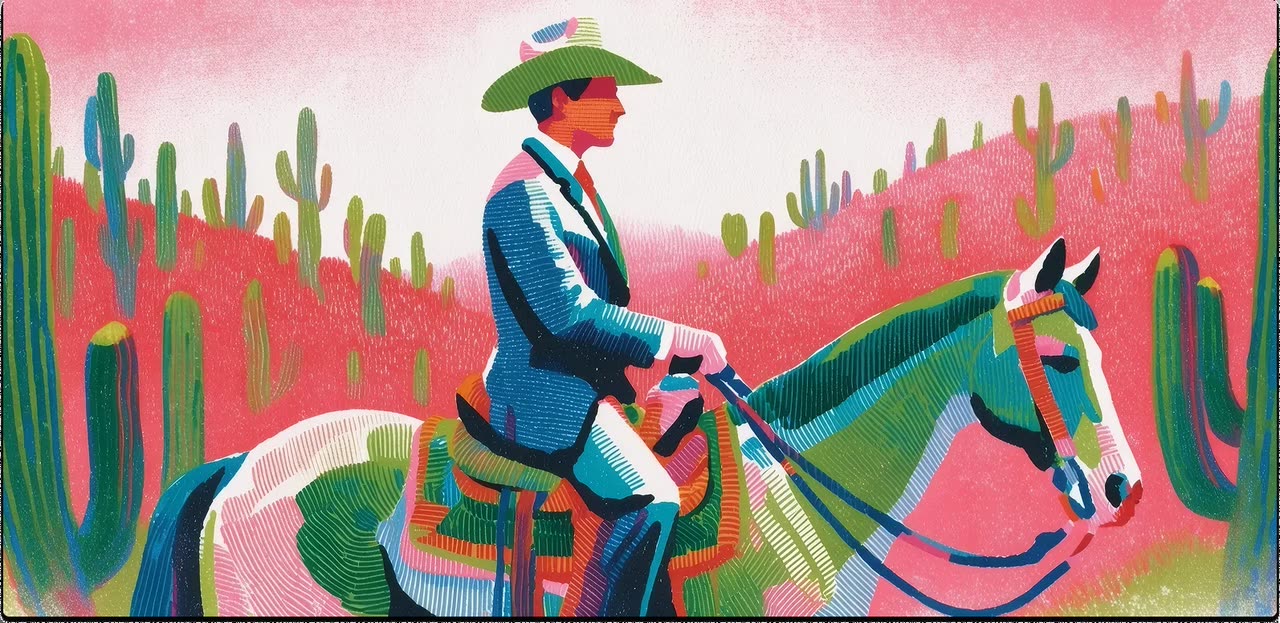
Krea 2's control system is dual-channel: a prompt expander (text channel, fanning simple prompts out into multiple directions) plus a style-reference system (image channel, specifying style via reference images). The technical report frames this as "three pillars of exploration": an expressive base model, a reference system, and an expansion system — "a powerful base model is only useful when the user can reliably reach the intended area within its wide distribution."
For creators: ERNIE-Image suits deterministic "I say, you draw" production (e-commerce images, posters, comic panels); Krea 2 suits exploratory "show me what else is possible" workflows (moodboards, concept design, style experiments). On Hacker News, Krea's team noted that internally, Krea 2 is used more than Nano Banana for moodboarding — at 4x lower cost.
Ecosystem Maturity: ERNIE-Image Leads, Krea 2 Catches Up
Four months after open-sourcing, ERNIE-Image's ecosystem is wide: official ComfyUI nodes, native CivitAI LoRA training (from 1000 Buzz), SGLang Diffusion + Cache-DiT up to 9x speedup, AMD Day-0 support, OpenVINO, a Krita plugin, fal.ai/Replicate serverless APIs, and mflux for Apple Silicon.
Krea 2 is just over a month old, but infrastructure has followed quickly: an official codebase, the Diffusers Krea2Pipeline, an SGLang cookbook, and an official LoRA collection (train on Raw, apply to Turbo for consistent generation). One caveat: LoRA training at 12B scale requires professional workstation GPUs or cloud compute — a higher bar than ERNIE-Image, which is trainable on consumer hardware.
How to Choose: A Question of "What You Want"
| Use case | Recommendation | Why |
|---|---|---|
| Chinese posters/packaging/comics | ERNIE-Image | LongTextBench ZH 0.9661, best-in-class Chinese text rendering |
| Commercial use, zero license reading | ERNIE-Image | Apache 2.0, no restrictions |
| Teams >50 seats in production | ERNIE-Image | Krea 2 requires enterprise license negotiation |
| Moodboards / concept exploration | Krea 2 | Style diversity + reference system + expander |
| Photographic style breadth | Krea 2 | 12B params + unfiltered data diversity |
| Low-VRAM local deployment | ERNIE-Image | 8B + GGUF quantization, consumer-friendly |
| LoRA training ecosystem | ERNIE-Image | Native CivitAI training from 1000 Buzz |
In one sentence: ERNIE-Image is the "fully open + deterministic" choice — Apache 2.0 with zero friction, open-source #1 in Chinese text rendering, and a mature ecosystem; Krea 2 is the "semi-open + exploratory" choice — free commercial use under 50 seats, standout style breadth, and a unique reference system, but with licensing thresholds and a Chinese ecosystem still unproven. For Chinese content teams, ERNIE-Image remains the first pick; for English-speaking creators chasing stylistic exploration, Krea 2 is worth a serious look. Both are open-weight — the best answer might be to keep both and switch by scenario.
Publishing info
- 中文版: https://ernie-image.app/blog/ei-152-ernie-image-vs-krea-2-cn-20260802
- English: https://ernie-image.app/blog/ei-152-ernie-image-vs-krea-2-english-20260802
- Published: 2026-08-02