ERNIE-Image for Generation + Qwen-Image-Edit for Editing: An Open-Source Hybrid Pipeline
ERNIE-Image's official editing model has been delayed from April to August, with the beta slipping again and again. But the community already voted with its feet: generate with ERNIE-Image, edit with Qwen-Image-Edit. The former is the open-source #1 in text rendering and layout control; the latter is the open-source #1 on the Arena image editing leaderboard at 1241 Elo. Together, two Apache 2.0 models complete the "generate + edit" loop that the ERNIE ecosystem has been missing.
Why This Combination
ERNIE-Image's strength is "from zero to one": posters, comics, multilingual typography, structured visual generation — LongText-Bench 0.9733, #1 among open-source models. Its weakness is equally clear: no official editing model, so the community has been making do with img2img + masks.
Qwen-Image-Edit fills exactly that gap. Built on the 20B Qwen-Image, Apache 2.0 fully open, it feeds the input image into both Qwen2.5-VL (visual semantic control) and the VAE encoder (visual appearance control) — enabling semantic and appearance editing through two parallel channels.
Core Capabilities of Qwen-Image-Edit
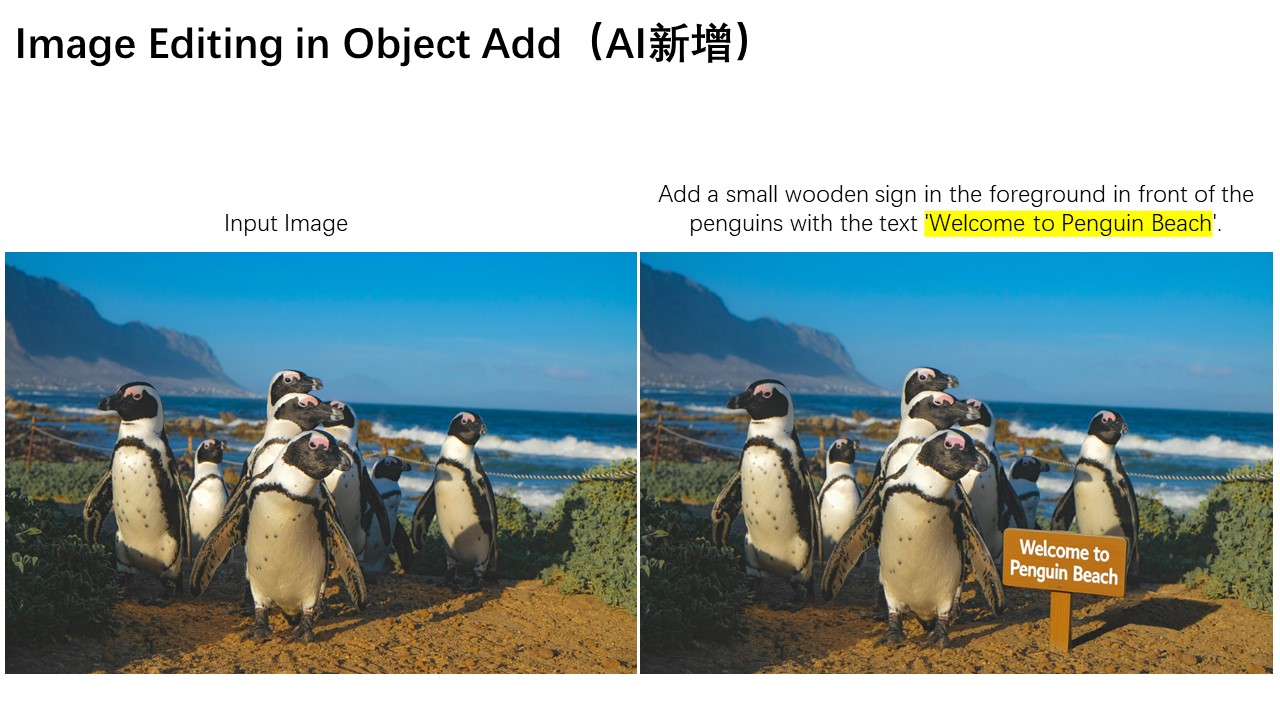
Precise text editing: bilingual (Chinese and English), add/delete/modify text in images while preserving the original font, size, and style. This extends Qwen-Image's text rendering strength into editing — something most editing models can't do.
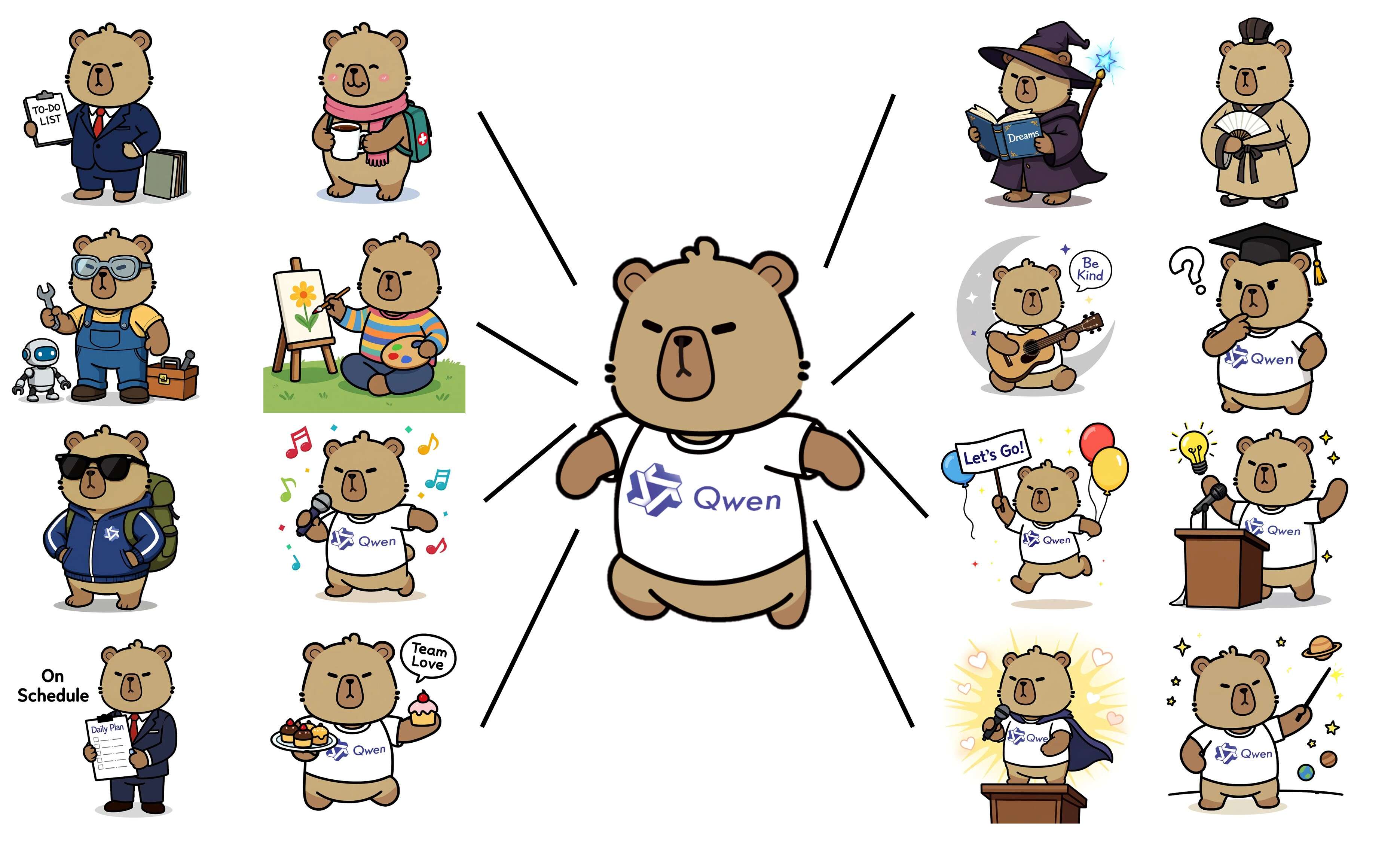
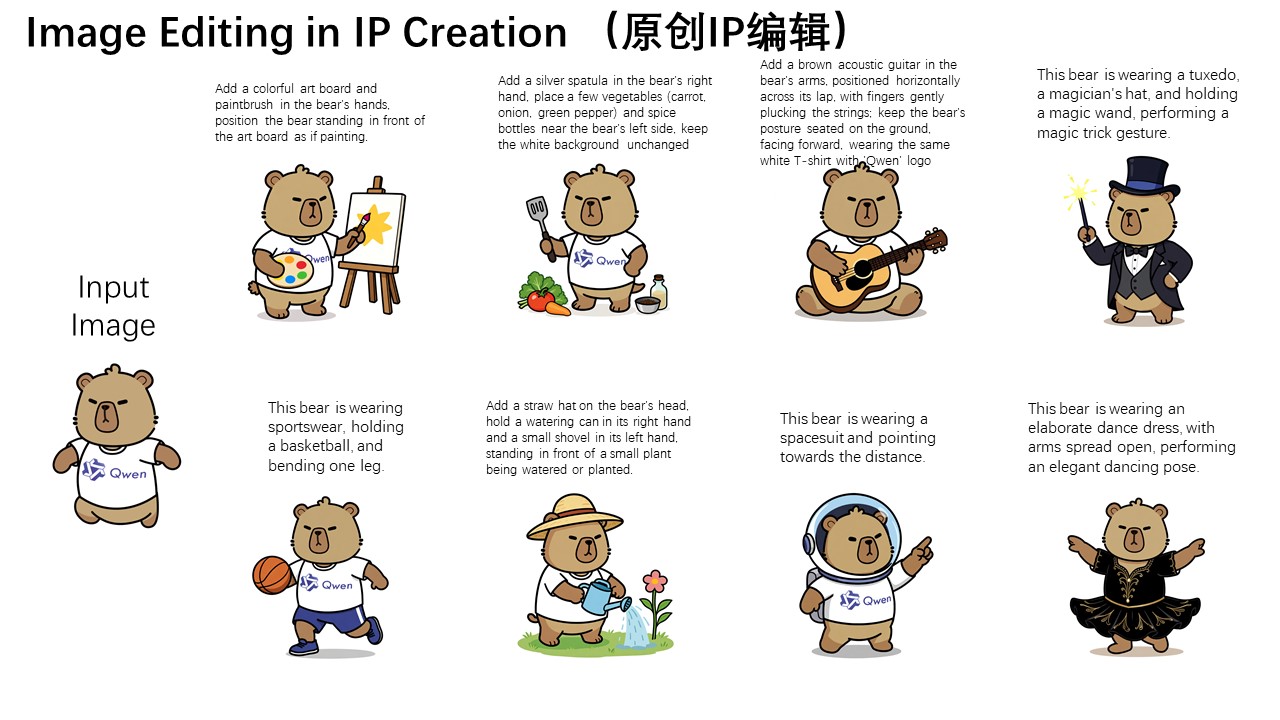
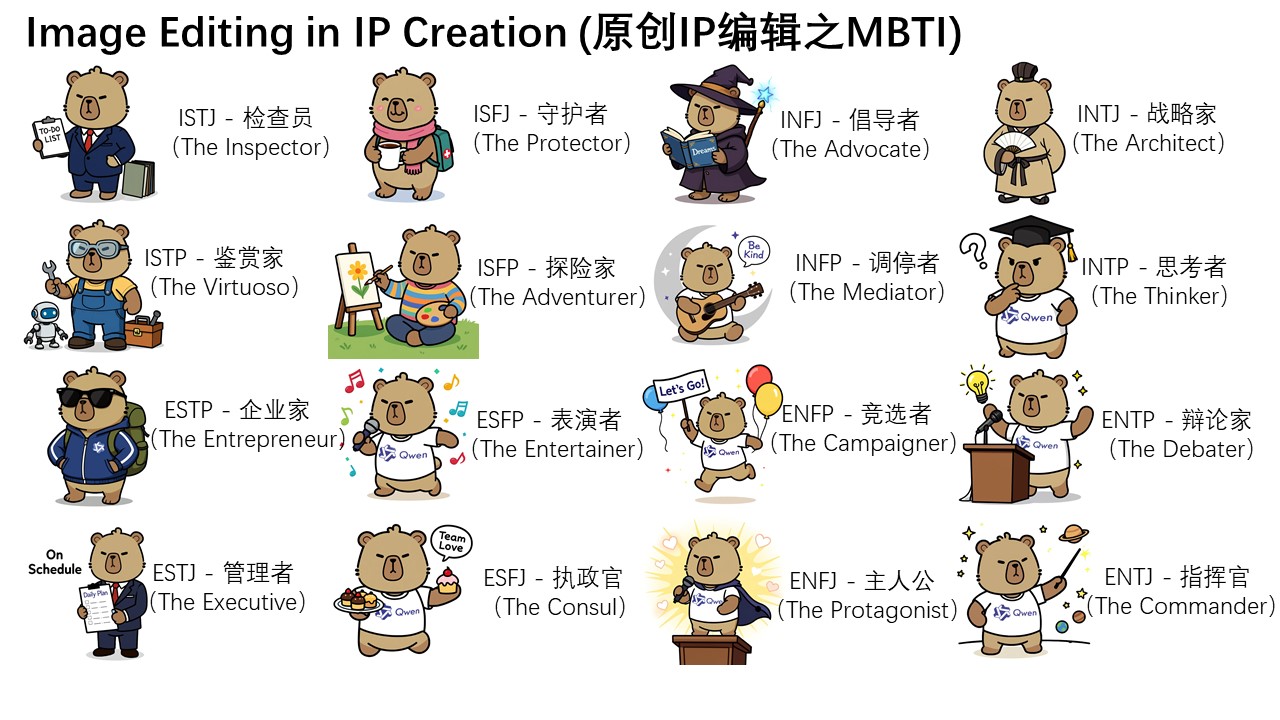
Semantic editing: modify content without breaking visual semantics — IP creation, object rotation, scene replacement; the result is still "the same image."
Appearance editing: style transfer, element add/remove/modify — low-level visual operations.
| Capability | Description | Typical Use |
|---|---|---|
| Text editing | Bilingual, preserves font/size/style | Poster copy changes, comic dialogue edits |
| Semantic editing | Content changes preserving semantics | Object swap, view rotation, IP creation |
| Appearance editing | Style and element-level operations | Style transfer, background replacement |
| Multi-image editing | Edit-2511 supports up to 3 reference images | Image fusion, character consistency |
Designing the Hybrid Pipeline
The division of labor: ERNIE-Image drafts the base image, Qwen-Image-Edit refines it.
E-commerce poster workflow
- ERNIE-Image generates the product hero visual (strong text rendering — price and selling points in one pass)
- Qwen-Image-Edit modifies details — swap background, change promo copy, adjust colors
- Optional second pass: img2img at low denoise or SUPIR upscaling
Comic workflow
- ERNIE-Image generates storyboard panels
- Qwen-Image-Edit edits dialogue bubble text (preserving the original font style)
- Multi-image editing keeps characters consistent
Brand asset workflow
- ERNIE-Image generates the layout framework
- Qwen-Image-Edit swaps logos, slogans, product shots
- Semantic editing ensures "it's still the same design after the swap"
ComfyUI Setup
Both models have native ComfyUI workflows. Qwen-Image-Edit needs three files:
📂 ComfyUI/
├── 📂 models/
│   ├── 📂 diffusion_models/
│   │   └── qwen_image_edit_fp8_e4m3fn.safetensors
│   ├── 📂 text_encoders/
│   │   └── qwen_2.5_vl_7b_fp8_scaled.safetensors
│   ├── 📂 vae/
│   │   └── qwen_image_vae.safetensors
│   └── 📂 loras/
│       └── Qwen-Image-Lightning-4steps-V1.0.safetensors
With FP8 quantization + the Lightning 4-step LoRA, an RTX 4090D (24GB) takes ~55s for the first generation and ~34s subsequently. On the ERNIE-Image side, use the official ComfyUI template (diffusion model + ministral-3-3b text encoder + flux2-vae).
Code-Level Usage (Diffusers)
# Generate: ERNIE-Image
from diffusers import ErnieImagePipeline
pipe = ErnieImagePipeline.from_pretrained("baidu/ERNIE-Image", torch_dtype=torch.bfloat16)
image = pipe("promotional poster: summer iced drink, large title text 'ICY SUMMER'", num_inference_steps=50).images[0]
Edit: Qwen-Image-Edit
from diffusers import QwenImageEditPipeline

editor = QwenImageEditPipeline.from_pretrained("Qwen/Qwen-Image-Edit", torch_dtype=torch.bfloat16)

edited = editor(image=image, prompt="change the title text to 'ICY DEALS', swap the background to a beach").images[0]
vs. Closed-Source Editing Solutions
| Dimension | ERNIE + Qwen-Edit Hybrid | GPT Image 2 (1463 Elo) | MAI-Image-2.5 (1401 Elo) |
|---|---|---|---|
| License | Apache 2.0, fully open | Closed API | Closed API |
| Text editing | ✅ Bilingual | ✅ | ✅ |
| Local deployment | ✅ Runs on 24GB | ❌ | ❌ |
| Cost | Electricity | ~$48/1k imgs | Usage-based |
| Controllability | Full parameter control | Black box | Black box |
Use Cases
- E-commerce and ads: generate + edit copy + swap backgrounds in one pipeline, fully local
- Comics and illustration: storyboard generation + dialogue editing, character consistency via multi-image editing
- Brand design: layout framework + element replacement, semantic editing preserves the design language
- Content production: batch-generate base images, refine one by one — near-zero cost
The open-source answer is never waiting for one model to do everything — it's pairing the two strongest specialists. ERNIE-Image creates, Qwen-Image-Edit modifies, and ComfyUI or Diffusers stitches them together seamlessly. That's the most practical open-source image workflow in August 2026.