ERNIE-Image vs Ideogram 4.0: Open-Weight Design Models Face Off — 8B Fully Open vs 9.3B Non-Commercial, Text Rendering and Layout Control Compared
On June 3, 2026, Ideogram did something the open-source community had been waiting two years for: it released the weights of its flagship Ideogram 4.0 model. For the past two years, closed models had left the open ecosystem far behind on in-image text — poster headlines, packaging copy, and signage rendered cleanly by proprietary models while open models kept misspelling letters. Ideogram 4.0 claims to end that gap, and it picked a direct rival: Baidu's ERNIE-Image, open-sourced on April 15, 2026.
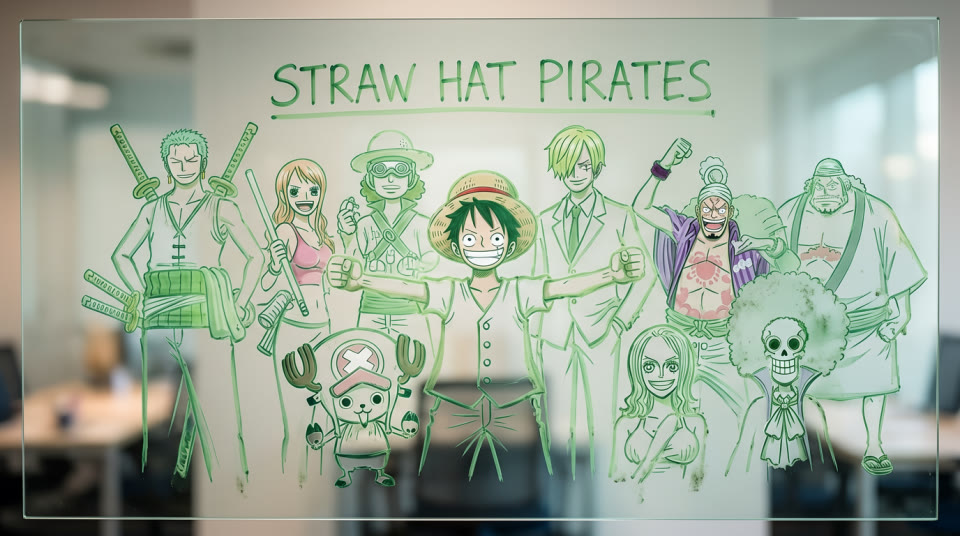
Both models are single-stream DiTs built for design work, both lead on text rendering, layout control, and structured generation (posters, comics, infographics). One packs 8B parameters under an Apache 2.0 license with strong Chinese and English support; the other packs 9.3B parameters trained from scratch, using structured JSON to pin every element's position precisely. When they meet head-to-head, anyone using open models for design work faces a very real choice.
Architecture: Two Takes on the Single-Stream DiT
ERNIE-Image takes a "compact + enhancer" approach: an 8B single-stream DiT backbone paired with a 3B Prompt Enhancer (PE) that expands brief user inputs into richer structured descriptions, using the FLUX.2 VAE for latent space encoding. The SFT version needs 50 inference steps; the Turbo version compresses that to 8 steps via DMD distillation and RL optimization.
Ideogram 4.0 goes "from scratch + vision-language encoder": a 9.3B single-stream DiT with 34 transformer layers and an embedding dimension of 4,608, trained with flow matching — not a fine-tune of any existing model. It has no separate prompt enhancer; instead it uses Qwen3-VL-8B-Instruct, a vision-language model, as its text encoder, concatenating hidden states from 13 intermediate layers into the DiT backbone — giving the model native image-understanding ability.
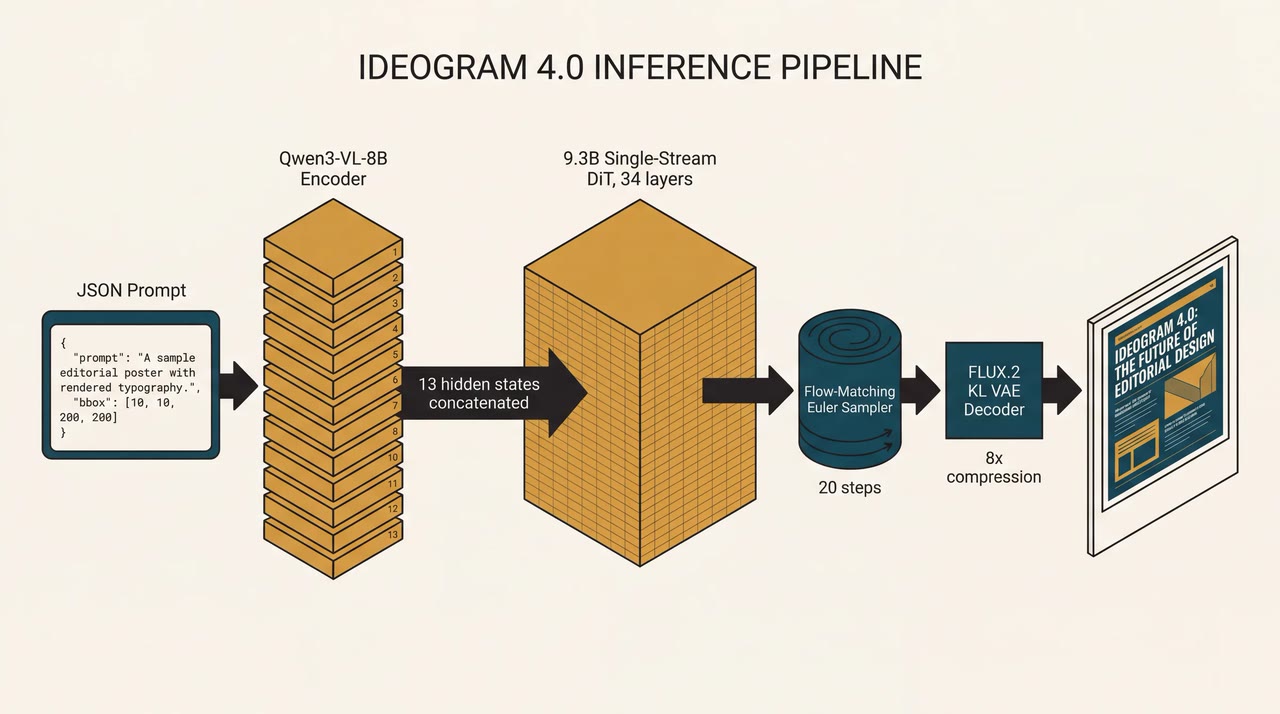
Both approaches have merit: ERNIE-Image's lightweight PE delivers stable enhancement for multilingual prompts including Chinese and Japanese; Ideogram 4's larger vision encoder buys deeper semantic understanding of layout. At 9.3B vs 8B, Ideogram 4 is slightly larger, but both sit in the same "efficiency tier" — far below Qwen-Image (20B) and FLUX.2 [dev] (32B).
Text Rendering: Two Different Report Cards
Text rendering is the core battleground, but the two models deliver scores on different dimensions. ERNIE-Image ranks first among open models on LongTextBench with 0.9804 EN / 0.9661 ZH (0.9733 average, w/ PE), trailing only closed-source Seedream 4.5 (0.9882) — and notably, the Chinese dimension is where ERNIE-Image dominates, its core differentiator versus most international models.
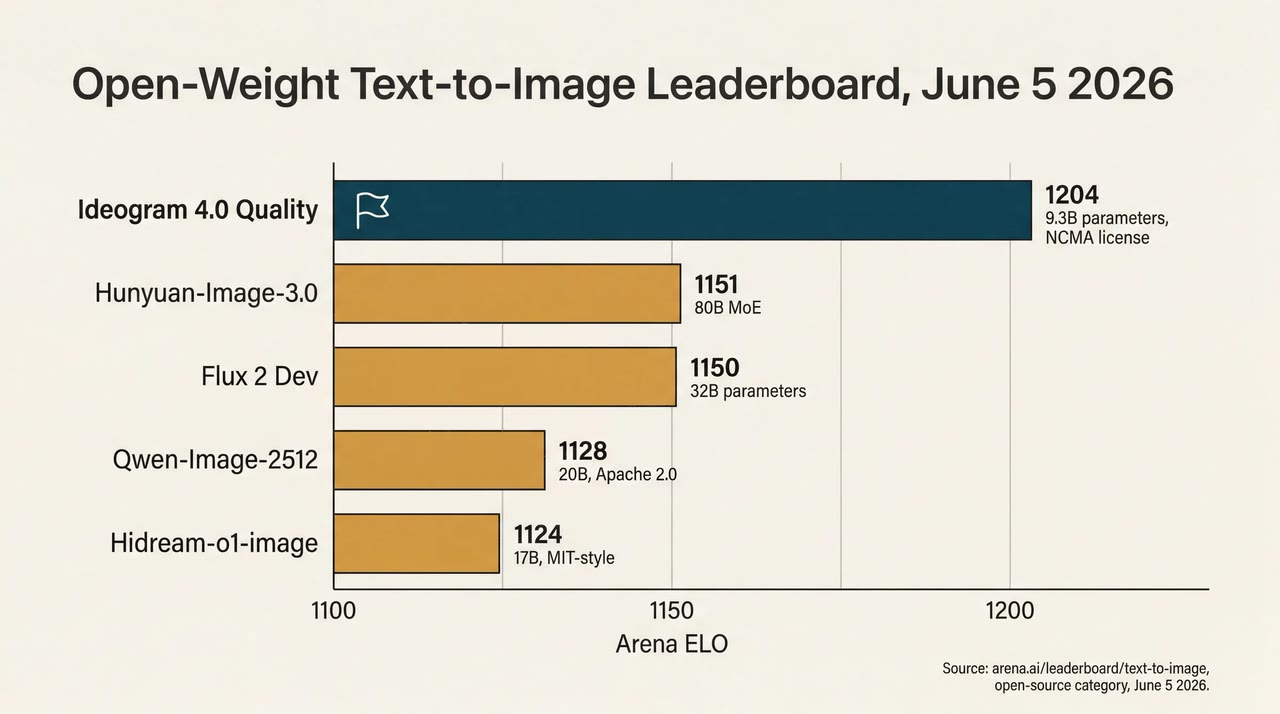
Ideogram 4 scores 0.97 on X-Omni English OCR and ranks #1 open-weight model on DesignArena's third-party blind leaderboard, with ELO 1204 atop Arena.ai's open-source ranking. The company claims its 9.3B text rendering beats much larger models — Qwen-Image (20B), FLUX.2 [dev] (32B), even HunyuanImage 3.0 (80B MoE) — in blind typography tests.
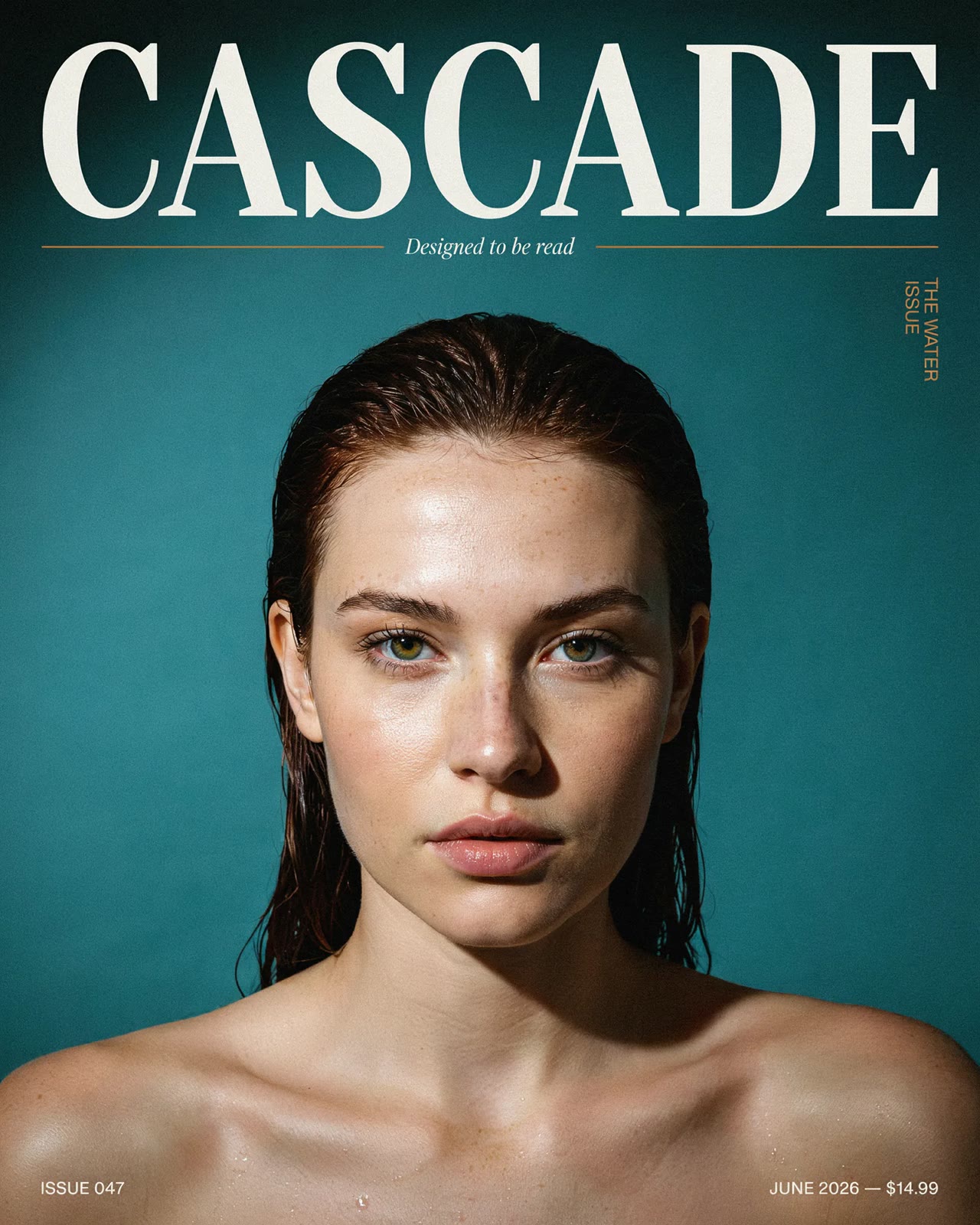
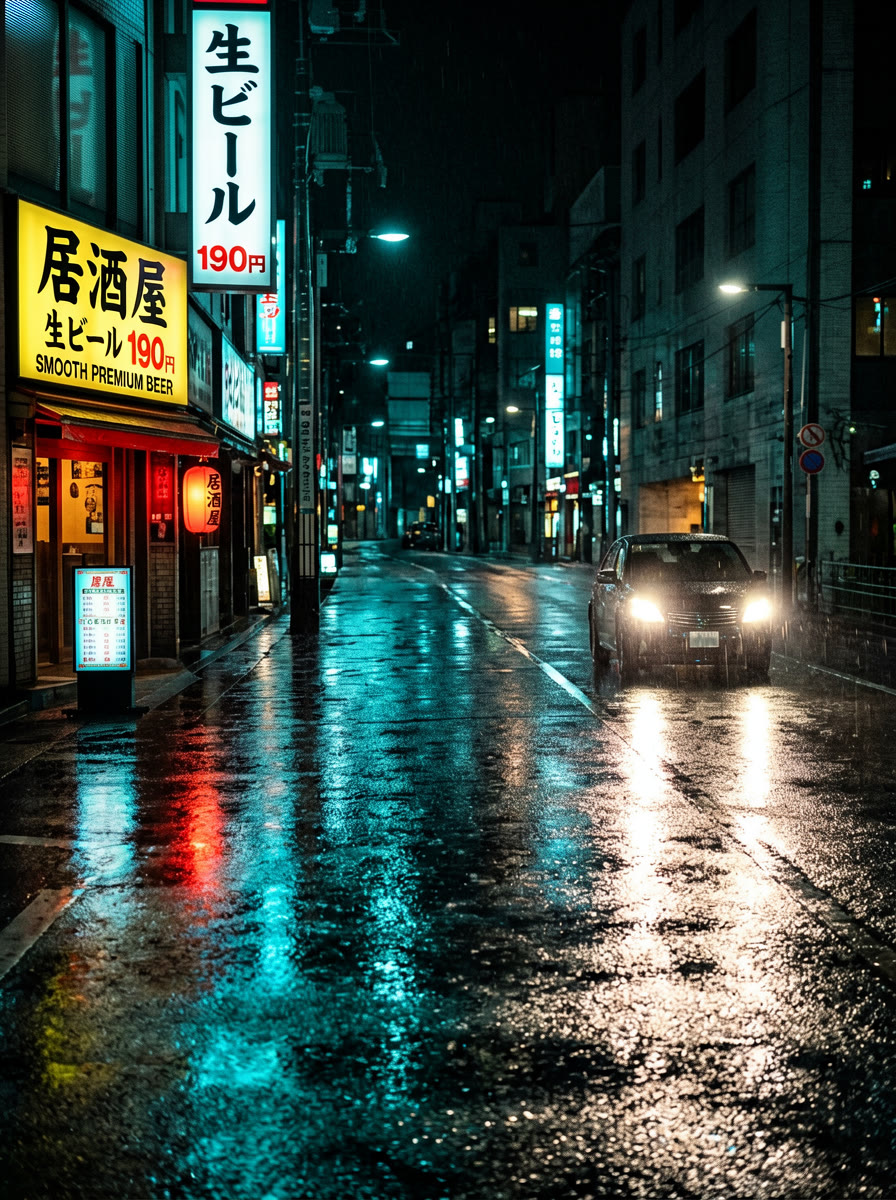
Bottom line: for long-form multilingual text, ERNIE-Image has LongTextBench backing; for dense typography and English type design, Ideogram 4 has the blind-arena backing. Both far outclass general-purpose models of similar size — but "which is better" depends on whether your text is Chinese or English, long paragraphs or display headlines.
Quick Start: Two Deployment Paths
Both models are in ComfyUI, so the entry path is nearly identical. ERNIE-Image loads via native nodes with Base/Turbo variants, weights auto-download from Hugging Face, and a 24GB consumer GPU is enough. Official options also include the Diffusers pipeline, SGLang serving, and an AI Studio online demo.
Ideogram 4 requires ComfyUI v0.16 or newer; weights are repackaged by Comfy-Org (ideogram4_fp8_scaled.safetensors into diffusion_models/, qwen3vl_8b_fp8_scaled.safetensors into text_encoders/). Official nf4 and fp8 quantized versions ship, with fp8 being more hardware-friendly.
Prefer not to self-host? Both have cloud APIs: ERNIE-Image is available on fal.ai, Replicate, SiliconFlow, and more; Ideogram 4 is on its official API and fal.ai's ideogram/v4 endpoint.
Layout Control: JSON Schema vs Natural Language
This is where the two philosophies diverge most. Ideogram 4's core innovation is structured JSON prompting: you write bounding-box coordinates and hex color palettes directly into the prompt, pinning the position and color of every text block and element. The official flow pairs it with magic-prompt, which converts natural language into JSON layout descriptions:
{
  "prompt": "A travel poster for Kyoto",
  "layout": [
    {"type": "text", "content": "KYOTO", "bbox": [0.1, 0.1, 0.8, 0.25], "color": "#1a1a2e", "font": "serif"},
    {"type": "image", "description": "Kinkaku-ji temple at sunset", "bbox": [0.1, 0.3, 0.8, 0.6]},
    {"type": "text", "content": "Autumn 2026", "bbox": [0.1, 0.75, 0.4, 0.15], "color": "#e94560"}
  ]
}
ERNIE-Image takes the opposite path: no JSON to learn — strong instruction following lets it execute natural-language descriptions of position, relationship, and layout. It tops GenEval at 0.8856 (w/o PE) among open models, with a perfect 1.0000 Single Object and 0.7925 Attribute Binding, demonstrating reliable execution of complex multi-object instructions. Official examples show that a plain sentence like "title on top, body in three columns, image on the right" produces a well-structured poster.
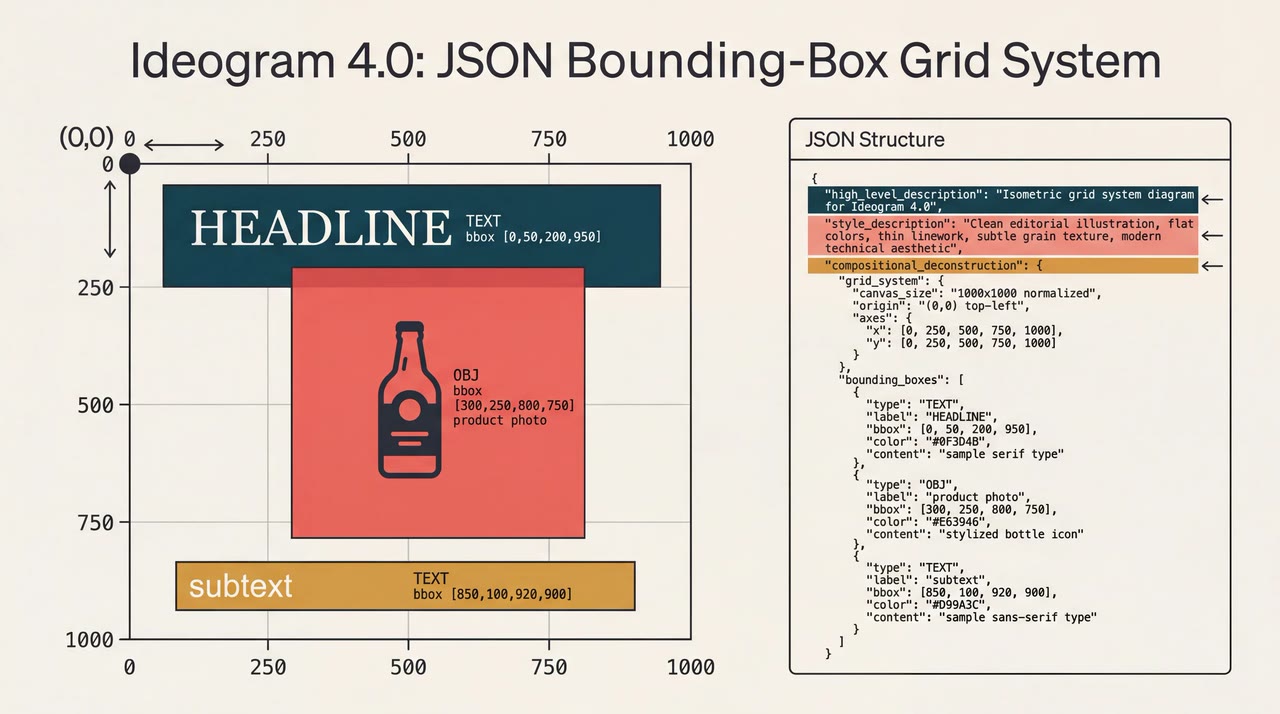
For designers, Ideogram 4's JSON layout means pixel-level determinism — every element's position is defined by coordinates, and tweaking one number refines the design. ERNIE-Image means semantic-level determinism — you speak naturally and it does its best, ideal for fast drafts and high-volume content.
Licensing: Fully Open vs Gated Non-Commercial
This is the most fundamental divide. ERNIE-Image is Apache 2.0: weights, inference code, and training details all open, with no restrictions on commercial use, modification, or redistribution. That's why it spread through CivitAI, ComfyUI, SGLang, AMD Day-0, and OpenVINO so quickly — zero legal friction.
Ideogram 4 is half-open: inference code is Apache 2.0, but the weights ship under the "Ideogram 4 Non-Commercial" license, gated on Hugging Face — you must accept the license agreement before downloading. Personal learning, research, and non-commercial creation are fine, but commercial deployment (especially embedding generation into a product) requires careful license review. The official announcement highlights open weights with a commercial license for enterprise fine-tuning, yet the community consensus is "usable, but proceed with caution."
| Dimension | ERNIE-Image | Ideogram 4.0 |
|---|---|---|
| Parameters | 8B DiT + 3B PE | 9.3B DiT |
| Released | 2026-04-15 | 2026-06-03 |
| Code license | Apache 2.0 | Apache 2.0 |
| Weights license | Apache 2.0 (fully open) | Non-Commercial (gated) |
| Resolution | 1024+ multi-aspect | Native 2K (2048px) |
| Inference | 50 steps / Turbo 8 steps | Three speed tiers |
| Chinese | Native strength | Multilingual, English-first |
| Control | Natural language | JSON layout + palettes |
Speed and Cost: 8-Step Turbo vs Three Pricing Tiers
ERNIE-Image-Turbo delivers near-SFT quality in 8 steps (CFG 1.0), giving sub-second generation on consumer GPUs; combined with SGLang Diffusion caching optimizations, inference cost drops dramatically. Its GenEval 0.8667 (w/o PE) shows only ~2 points lost for double the speed.
Ideogram 4 on fal.ai is billed per output megapixel: Turbo $0.03/MP, Balanced $0.06/MP, Quality $0.10/MP, with +$0.03 for prompt expansion. A 1024×1024 image is ~1MP ($0.03–$0.10); native 2K output (~4MP) in Quality mode runs about $0.40. Self-hosted, both approach electricity cost — the main difference is VRAM: ERNIE-Image runs in 24GB, while Ideogram 4's fp8 quantization is slightly heavier but still consumer-grade.
Ecosystem: Beyond ComfyUI
Four months after open-sourcing, ERNIE-Image's ecosystem is everywhere: official ComfyUI nodes, Diffusers pipeline, SGLang serving, native CivitAI LoRA training, fal.ai/Replicate/SiliconFlow cloud APIs, AMD Day-0 GPU support, Intel OpenVINO deployment, plus a thriving community LoRA library. Chinese-language tutorials and templates are a unique advantage.
Two months after release, Ideogram 4 is catching up fast: Comfy-Org official repackaged weights, MLX quantized builds (Apple Silicon), fal API, enterprise fine-tuning — and a roadmap for editable text layers and movable image layers, a "layered generation" stack where output comes back as an editable file. That's its differentiated bet on professional design workflows.
Verdict: How to Choose
The choice is clear. If you need commercial freedom — embedding the model in a product, running batch production, training your own LoRAs — ERNIE-Image's Apache 2.0 license and mature ecosystem are the least-friction answer in open design models today, with unbeatable Chinese long-text rendering. If you need pixel-level layout control — brand posters, packaging, magazine covers demanding precise English typography — Ideogram 4's JSON layout and native 2K resolution justify a dedicated deployment, once you confirm the non-commercial license works in your scenario.
The two can also complement each other: ERNIE-Image for Chinese content and high-volume batch generation, Ideogram 4 for English brand materials with strict layout requirements. The open-weight design model race is just beginning — and for users, that competition is worth more than any single model's victory.
Sources: Hugging Face baidu/ERNIE-Image model card, GitHub baidu/ernie-image, Ideogram official press release (2026-06-03), fal.ai Ideogram 4 documentation, Ideogram 4 technical community analyses.